
Clear The Clutter For Better Emotional Health
Do You Have Too Much Stuff and Too Little Emotional Health?
Is your life chaotic?
Do you find yourself feeling stressed, overworked, and overtired all the time?
Have you thought about the state your house is in and how that might be affecting you?
Clutter, caused by holding on to far too much stuff, can stress you out and cause you to feel frazzled.
It can also make you feel drained and make it harder to get restful sleep.
Taking care of the clutter in your home and office can improve your overall emotional health, productivity, focus, and even your sleep.
In this article, we’ll examine clutter, its effect on you, and how minimizing it can improve your emotional health.
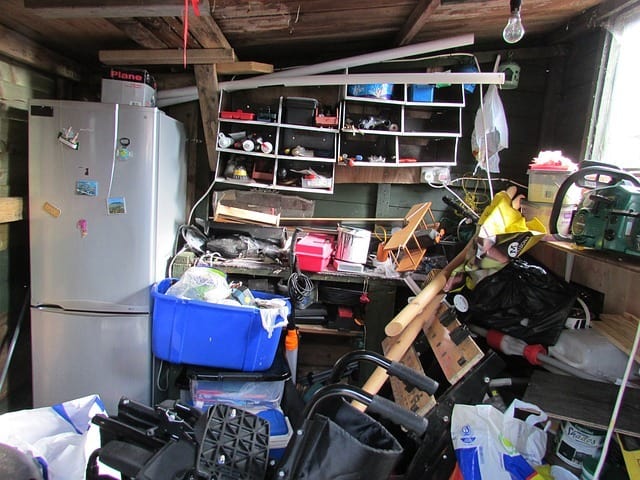
What is clutter?
In order to remove clutter, we have to define it.
Clutter is a subjective term, typically used to describe unnecessary, excess items that take up space.
There are different types of clutter, according to organization experts consulted by WebMD. Peter Walsh, for example, splits clutter into two categories:
Memory Clutter
According to Walsh, “memory” clutter is the clutter that reminds us of an important event in our lives.
This could be a saved movie ticket stub, newspaper clippings, etc.
These objects typically have some level of sentimental value attached to them, making them harder for us to part with.
Someday Clutter
“Someday” clutter is the term Walsh uses for items you’re holding on to, merely because you think you might use it someday in the future.
These items could be extra alarm clocks, backup lamps, backup towel rods, etc.
What these two types of clutter have in common is their lack of use.
What separates clutter from other items you own is their lack of use or purpose in your life.
No one else can identify what’s clutter to you, that’s what makes it subjective.
Clutter is any item in your possession that you are not using that’s merely taking up space.
“It’s about balance. If you have so much stuff it drags you into the past or pulls you into the future, you can’t live in the present,” Walsh advises.
Why should you work to minimize clutter?
Clutter can cause us to feel stressed, drained, and anxious.
It can make it hard to get work done, to sleep, and to stay focused. Clutter can also contribute to your feeling overwhelmed.
It’s bad for your physical, mental, and emotional health; clutter collects dust, mold, and other allergens and takes up space in your home, becoming a fire hazard.
Clutter can cause a stifling feeling in those living in it.
Minimizing your clutter can help to ease your stress, increase your productivity, improve your sleep, and simplify your everyday life.
How to minimize clutter
It’s never easy to let go of something you’ve been holding onto, but sometimes it’s necessary.
Analyze the item in question
Why are you keeping it?
What purpose does the item serve in your life? Have you thought about it or noticed it in the last month or year, even?
How much space does it take up?
If the item in question is something small and easily storable (like a ticket stub or postcards) with a lot of sentimental value, you should keep the item and store it away.
You’ll be glad to have the reminders later in life.
However, if the item has little to no sentimental value, you should part with them. Larger items require more thought as you have to factor in if you have the space for it.
Can you bare to part with it?
If you’re not sentimentally attached to the item and you haven’t used it, you should consider if it’s something with which you’re willing to part.
If the goal is to declutter your space, the answer should probably be yes.
Once you’ve gone through and removed the excess clutter, you need to figure out what to do to organize what you have left.
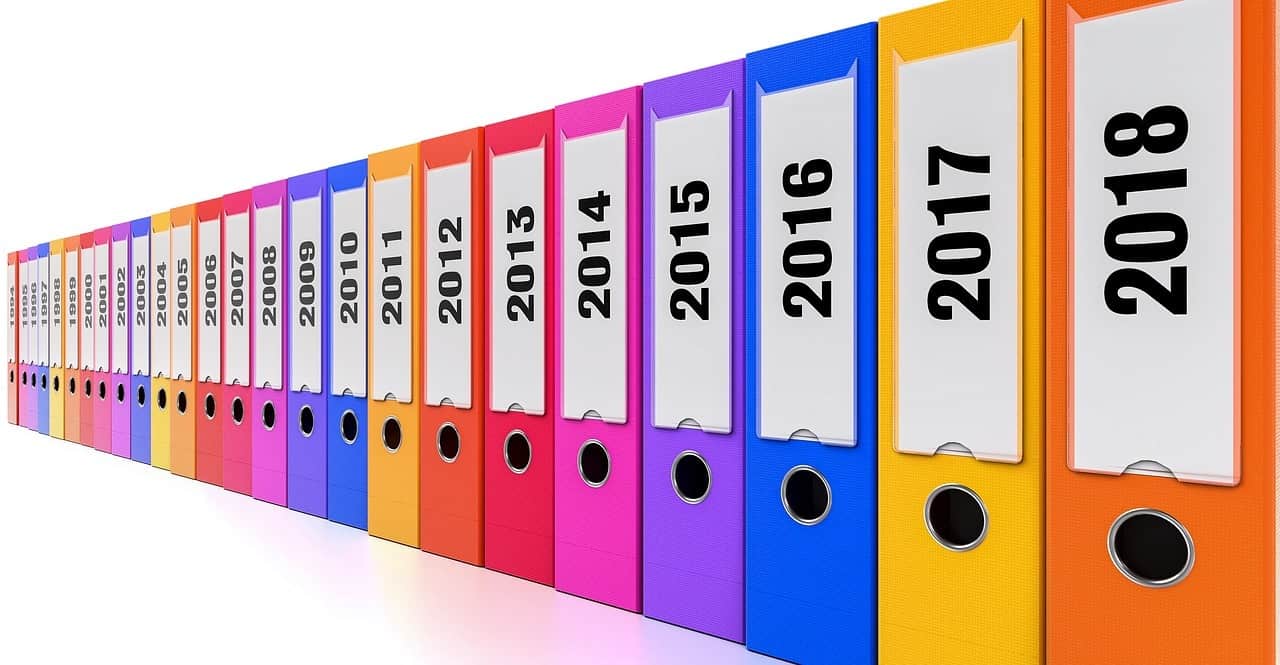
Purchasing storage containers, shelves, or putting important or memorable papers in file folders or scrapbooks can help your living space remain clutter-free despite hanging onto some of the “memory” clutter.
How To Declutter Your Mind
A little stress is good.
It keeps us doing our best. A lot of our stresses, however, come from things that worrying about things that aren’t important, or that we can’t do anything about.
“The Serenity Prayer” asks to give us “the serenity to accept the things we cannot change, the strength to change the things we can, and the wisdom to know the difference.”
That’s a pretty good roadmap to having less to worry about by learning to declutter your mind.
Acknowledge Your Negative Thoughts
The serenity prayer is just trying to ignore the things that we’re worried about has a way of not working. Science calls it “the white bear effect”: if you try not to think about a white bear, chances are that’s the only thing that’ll be on your mind.
One trick advocated by mindfulness experts and backed up by research discussed in a 2017 Psychology Today article, is to acknowledge your negative thoughts.
Dwelling on your negative thoughts is bad and trying to ignore them isn’t likely to work out but realizing that you’re having negative thoughts and acknowledging that it isn’t making things better can make them easier to let go.
Recognise the thought and then label it as ” NOT USEFUL”
Challenge Your Negative Thoughts
According to Inc, you can also shake negative thoughts by challenging them head-on.
Most of our worries can seem pretty big in our head, but a lot of the time they aren’t that bad.
Making this a conscious decision can be difficult at first, but after enough time your brain can start to challenge negative thoughts on its own, making you more positive in general.
A similar tactic is to ask yourself ‘What’s the worst that can happen?’
If the answer isn’t that significant, then you can probably let the issue go.
If the answer is bad, then you should probably sit down and think of a solution.
Sometimes the things that stress us are silly issues that we don’t need to worry about but sometimes they stem from legitimate problems that we need to overcome to move past them.
The same article suggests that we be careful not to try to eliminate stress by preventing ourselves from thinking about our problems in general.
To overcome problems, we often need to plan, which can be both stressful and important.
The secret is to know the difference between dwelling on your problems and solving your problems constructively.
Limit Your Responsibilities
Sometimes our mind is cluttered because we accept too many responsibilities.
A recent article in The Huffington Post recommends that we can declutter our lives by learning to say ‘no’ when too many people ask us for our time and energy
This can be hard to do, but if we say ‘yes’ to too many people we often letting someone down or eventually running ourselves down anyway.
If we overcommit yourself and can’t deliver it’s often harder on others than it is to tell them honestly that we have too much to do and don’t want to let them down.
Paradoxically, being a part of organizations, including service organizations, can help us manage our stress.
Social and religious groups can demand our time and energy, but they can also provide us with strong social networks that support us when we need it and help us to feel accepted.
The secret is having enough groups to keep us busy without having enough responsibilities to run us into the ground.
Avoid Multitasking
An article in Forbes Magazine advises us that a similar way to declutter our minds is to avoid multitasking.
When we have a lot of things to do, sometimes it seems like the only thing that we can do is do multiple things at once, but this only makes it harder for us to focus and make it take longer for us to get things done.
How To Declutter Your Spirit
Stress can enter our lives when we let our heads go crazy, but a similar thing can happen with our hearts.
We can make events seem more important in our minds which can make them more stressful, and we can do the same with people. Just as we sometimes need to sort our priorities to reduce stress in our lives, sometimes we need to sort our relationships to do the same thing.

Forgive – Or Forget
Crossway.org defines “soul decluttering” as “the intentional process of taking stock of our lives, including our relationships.
For Crossway, this often means holding onto grudges.
As a faith-based organization, Crossway recommends that we forgive those who have hurt us. Forgiving others can be a good way to repair relationships, end grudges, and ease our consciences.
The issue with forgiving ourselves is that it can be hard.
What can be easier is forgetting rather than forgiving.
Forgetting about people who have wronged us doesn’t do anything to repair our relationships with those people like forgiveness does but trying to understand their motives and point of view and moving on can still be easier and healthier than dwelling on things in our past that we can’t control.
Recognize Limitations
Things in our past that we can’t change can be an unnecessary burden, but so can things in our present that we cannot change.
These days we have access to news and information from all over the world and most of it seems negative.
Sometimes we need this information to make informed decisions like voting, but sometimes becoming too attached to, or worried about, issues abroad is just another concern about things that we can’t change that gives us anxiety that we don’t need.
Sometimes there are things that we can do to make the world a better place, like recycling, cutting down on pollution or buying locally.
These things require staying informed to some extent, and they do make us feel better, but getting too worked up about other problems doesn’t help anybody.
Recognize Milestones
A 2017 article posted on Lifehack.org tells us that accepting rather than wanting is one way to declutter our souls.
This doesn’t mean that we shouldn’t have long-term goals – long-term goals make life worth-while.
What it does mean is that we think too often about how far we must go to achieve those goals, and don’t think often enough about how far we’ve come.
Experts say that when we’re going after smaller goals, like losing weight or quitting smoking, we should reward ourselves at small milestones, like losing two pounds or going a week without a cigarette.
Small celebrations like this can also help us to appreciate how far we’ve come on larger goals like buying a house, reaching a certain position in our careers, or saving money for retirement.
Don’t Get Rid Of Too Much
If you think of your spirit like you think of your house, clutter can build up in the same way, and both can affect your health.
However, there’s more than one way to declutter your house, and your soul is the same way.
Sometimes the best way to declutter, whether it’s a house or a soul, is to just get rid of things that we don’t need.
Just like accumulating things can make us feel important or secure, accumulating responsibilities and stresses can make us feel indispensable and needed, but sometimes it’s best to let things go and be happy with ourselves.
On the other hand, you don’t have a garage sale every time that you feel like your living space is getting too messy.
Sometimes decluttering is less about getting rid of things and more about putting things where they belong, whether that’s in the closet or in perspective.