
5 Way that a Hectic Lifestyle Damages Your Health
The fast-paced hectic lifestyles that many people have come to adopt as the norm is not all it’s cracked up to be. While many focus on doing more and more, they often forget the whole point of success, which is to be able to do less and less and still maintain a good lifestyle.
What´s the point of planting seeds if you have to sell the farm to do so?
Yet that is all too often what happens. When it comes to health, there is a dark side to constantly pushing yourself to produce more and more.
One of the greatest deprecations to health due to a hectic lifestyle comes in the form of negligence.
Typically when a person gets so busy with all the “most important” things in life they often forget to make time for the activities that might not be so urgent but that still have a huge impact on quality of life. One of those important activities is exercise.
Exercise
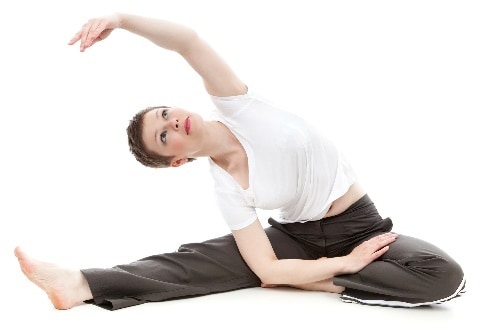
The percentage of overweight and sedentary individuals has been on the constant rise for many years, in no small part thanks to a busy, work-packed life. Exercise is one of the largest factors in maintaining good health throughout the years and anything that threatens to remove that piece of the puzzle puts the rest of the game in jeopardy.
Even if someone stays strong and manages to make room in their life for exercise, there are usually other factors of maintenance that are neglected.
Nutrition
When life gets to be too much to handle, good nutrition tends to be the first thing to go. Many people are too busy to sleep or breathe, let alone sit down and prepare a decent home-cooked meal. Fast food and TV dinners three times a day quickly become the substitute, and it goes without saying just how hard it can be to get consistently healthy fare on a fast food diet.
Mental and emotional health too suffers when there isn’t enough room on the plate for self-care. When asked what hobbies and activities they do for fun, many professionals will shrug their shoulders and say “none.”
While this might not appear destructive on the surface, it can actually have severe consequences to mental and emotional stability. Relaxation and fun are just as important to good health as vitamins and sleep are.
Hobbies And Recreation
Numerous studies have demonstrated the therapeutic and regenerative effect that hobbies and recreation can have on both physical and mental health. Many people who suffer from anger management issues, anxiety, and other emotional disturbances could probably trace the cause back to a drought of fun and relaxation. Whether you’re a neurosurgeon or a garbage man, everybody needs to take a little bit of time to unwind and enjoy themselves.
A lack of fun and relaxation leads to the fourth detriment to health caused by an overly chaotic life, and that is chronic stress.
There are countless studies that expound the plethora of negative health consequences that stress produces, from heart attacks to weight problems and from depression to temporary personality disorders.
There seems to be no aspect of life that is free from the necrotic touch of chronic stress. Many marriages have ended because of financial reasons, quite possibly due to the constant stress fostered by deep financial issues. It is very difficult to maintain the passion of love alive when stress consumes every waking thought.
Means Without An End
The fifth and final detriment to health caused by a hectic lifestyle is that it can quite possibly change the course of your entire life. It is not uncommon to hear of cases where an individual began working towards a career goal with the idea of using that career to achieve some long sought-after dream. After years of life-draining work however, the dream is forgotten and replaced by the career itself.
It isn’t that the individual gave up on achieving the dream, but rather that after focusing their entire mind, life, and soul around the means to the end, the means eventually became an end in itself, crowding out the original dream entirely.
It is natural consequence that when a person obsesses and stresses over something for long enough, that thought or idea begins to absorb the entire mind, becoming the central focus of life.
The effect is basically that one trains her mind so much to think about the means, the career, the finances or whatever, that eventually that idea becomes the only thing that the mind is capable of comprehending, and maybe even the only thing that the mind capable of desiring.
Where once a healthy zest for life once dwelled, there now resides a trojan horse of empty time trials and productivity goals, with no real end point in sight.
This is the ultimate trap of the hectic lifestyle, where one gets so used to living in a constant rush of cortisol and adrenaline that he forgets how to enjoy the company of his friends and family, or loses interest in the hobbies and dreams that once gave her hope and longing for the future. Instead of enjoying life, one merely tries to beat it.
Existence becomes a meaningless chain of milestones that lead nowhere.
For that reason alone it is imperative to take some time to stop, disconnect, sniff the roses, and maybe even the moldy bananas beside the sink, just for the sake of remembering that life still exists outside the workplace, because if life wasn’t made up of the little moments of love, joy, laughter, and struggle, then what would be left?
Having goals and milestones is great, as long as they don’t make you lose sight of the fulfillment you hoped to gain from them. In like manner, having a crazy week or two here and there is just fine, as long as it doesn’t become the norm.
How Breathing Exercises Can Calm Your Mind

You may have noticed that anytime you feel anxious or stressed, the standard advice you receive to help you calm your mind and body always has to do with controlled breathing exercises.
This isn’t just advice that people and doctors are tossing out at you without cause. In fact, there is a scientific reason that breathing exercises work to calm down the mind and the body.
The primary purpose of breathing is the absorption of oxygen and to expel carbon dioxide. When stressed, a person tends to take small, shallow breaths, using their shoulders instead of their diaphragm to get air in and out of their lungs. This breathing style causes disruption to the balance of gasses in the body. This can lead to shallow over-breathing or hyperventilation.
When your body begins to feel the effects of being stressed out, your adrenal glands release something called cortisol. Cortisol is more commonly known as the stress hormone, and when your cortisol levels are elevated, there are many negative side effects.
Some of the effects of having increased levels of cortisol include lower immune function, disruptions in both the memory and the learning functions, an increase in blood pressure and an increased risk for depression and other mental illnesses.
Of course, all of these things don’t just happen because you experience occasional stress, but rather if you are dealing with stress on a regular basis and not doing anything to help reduce the levels of stress your body feels.
Another side effect of the increase in cortisol levels is that your body shifts into the sympathetic nervous system. The sympathetic nervous system is responsible for mediating the hormonal stress response better known as the fight or flight response.
This means that when the sympathetic nervous system takes over, it has the following effects on your organs:
Eyes: Dilates the pupils
Heart: Increases the rate and force of the heart contractions
Lungs: Dilates the bronchioles and circulates and adrenaline
Sweat Glands: Activates secretion of sweat
What Happens When You Do Breathing Exercises?
When you do breathing exercises, you are breathing in a slow, gentle, and even way. When you are breathing this way, the effects of the sympathetic nervous system are minimized as the parasympathetic nervous takes over.
The parasympathetic nervous system works alongside the sympathetic nervous system. The sympathetic and parasympathetic nervous systems are often considered opposites of one another. However, this relationship is not antagonistic. Instead, the relationship is complementary.
Often referred to like the rest and digest system, the parasympathetic nervous system conserves energy as it reduces the levels of cortisol in the body. The reduction in cortisol leads to a slowing of the heart rate, which in turn also lowers blood pressure and increases feelings of relaxation.
Some of the other benefits to controlled breathing include:
– A reduction in the lactic acid buildup in muscle tissues.
– Levels of oxygen and carbon dioxide in the blood.
– Improved function of the immune system.
– Feelings of calm and well-being are increased.
When we are focused on our breathing, our mind automatically becomes calmer. Since the rest of our body is being told to relax, our mind is no longer focused on all of the things that are going on in our body.
Another advantage to focused breathing is that our mind needs to focus on the act of taking slow, even, and measured breaths. This shift is focus allows our mind to clear. A clear mind allows us to approach problems with a clear mind without having stress cloud our judgment.
How Meditation Benefits Those With High Stress Jobs
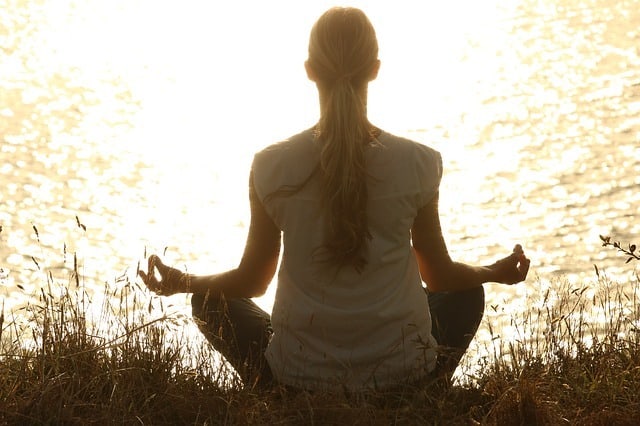
In our world of advanced machinery, medical techniques, and software resources, traditional techniques for solving issues are often forgotten or shoved aside. Meditation however remains a constant and reliable technique for resolving health issues regarding stress and all of its accompanying symptoms.
For many professionals working in high stress jobs, meditation continues to provide an excellent way to help maintain their fitness in the emotional, mental, and even physical aspects of their life.
In order to understand all the benefits of meditation, it is important to know a little bit about what meditation is and how it works. To begin with, there are two broad categories into which you can classify most types of meditation.
The first one deals with negation, or removing all things from the mind, leaving it as a blank slate.
This achieves the goal of relaxation by literally removing all cares, worries, and even external stimuli from the mind. It is in effect a form of imposed sleep.
For when you are unconscious, unless you are dreaming there is practically nothing running through your mind at all, and your brain has a chance to recover from the activities of the day.
The second kind of meditation is the complete opposite. It requires you to focus intensely on a specific idea until that subject consumes and replaces all other thoughts.
This second method is more common and probably easier to achieve than the first, but both definitely have their uses.
The first method is well suited for helping to achieve a state of unconsciousness, especially for those who have great difficulty falling asleep, while the second is more geared for wakeful relaxation.
While many are skeptical of the effectiveness of mediation, there are in fact concrete methods in which it can be used to affect the mental and physical health of those involved, most of which revolve around the principle of unity between mind and body.
It is intuitive to some, but not so obvious to others, but the truth is that what happens in your physical body affects your mental and emotional health, and vice versa.
If someone stabs you in the arm, you are likely to sense pain, feel enraged, and become aggressive.
On the opposite side of the spectrum, if you get up to sing in front of a hundred thousand people, then chances are you are going to feel nervous, your palms will sweat, and you will start to shake.
These are all examples of mental, emotional, and physical responses to some external stimuli.
Your brain and body respond to the situation in the way it thinks that it should respond, and the type of response is usually dictated by how you perceive the situation.
If your friend does not find spiders to be terrifying, but you do, then your physiological response to any eight-legged creature will probably be different from hers.
The situation, as well as how your mind perceives the situation, combine to create an effect in the mind and the body.
Meditation then makes use of this idea to help use your body to relax the mind, and in turn use the mind to relax the body.
Think of a seesaw, if you push one side up, the other goes down. The mind and body are connected in much the same way.
But how does it actually help?
Well, in the short term, meditation helps by replacing your cares and worries, typically with something neutral or even relaxing.
You’ve probably heard meditation tapes that all talk about visualizing a relaxing scene, whether it be your back porch, or a private beach in Hawaii.
The idea is to replace the stressful thought with a relaxing one, and thus divert your mind’s attention away from the stress.
This tends to be very effective, as the mind can only efficiently focus on one idea at a time.
The more you practice, the greater your focus becomes, and the easier it is to eliminate all other thoughts but one.
This is the same principle that comes into play when reading a good book, playing a game, working on a favorite hobby, exercising, or even watching TV and movies.
Even people who get drunk tend to do so with the same goal in mind. They all seek to find something to distract their mind from the problem at hand.
Meditation is a natural way to achieve that goal. It is also one that does not depend on external assistance, which means that you can use it any time, and anywhere.
If you are stressed at work, you don’t need to freak out that you don’t have a bottle on hand to take the edge off your stress.
You can just put on some headphones and take a five minute break to get into your happy zone. It’s quicker, easier, less expensive, and way less damaging to your brain and liver.
The second way that meditation can be of help is through mental suggestiveness.
That is an ambiguous term that basically means that your brain is very gullible. It will often believe what you tell it to believe. It is the main idea behind most forms of hypnosis.
If you tell the brain to think, feel, see, or believe something, then it will try it’s best to do so. The act of meditating on relaxing ideas tells the brain what to think about and what to feel.
With practice, a person can get so good at telling the brain what to feel, that they can actually summon up any emotion on command, whether it is sympathy, anger, mercy, excitement, or tranquility.
This is the concept of “mind over body,” in which the ideas consciously presented to the brain take precedence over the external stimuli presented to it.
This effect can be taken one step further and if so, becomes something called mental conditioning.
Most people have heard of Pavlov’s dog, a pet that was trained to salivate at the sound of a bell, or jump in fear at some other random stimulus. The brain is excellent at adapting to different patterns, and that includes being trained to relax on cue.
If regular patterns of meditation are established and followed using the same mental and physical cues, then eventually the mere thought of a beach in Hawaii, or the sound of a screen door opening and closing, or the mention of the name of your favorite co-worker, will trigger a relaxation reflex in the brain, causing a wave of peace to wash throughout the body. The more it is used, the more effective a tool it becomes.
That in fact, is the true goal of meditation for most individuals who seek it out to cure their stress, to condition their minds so much that they can relax on command, and it is a goal that is accessible to anyone.
Just as frequent and consistent exercise can help anyone lose weight and become stronger, regular meditation can help even the most hot-headed executive to find peace amidst the storm.
How Nature Helps Bring Inner Peace And Calmness Of Mind

The energy offered by Nature is one of the most amazing and magnificent things in the entire Universe. It is full of magic and wonder.
The way that nature uses energy in creating life is a magical process, which is why it can utilize sacred geometries and mathematics to direct its energy for manifesting beautiful and complex structures.
For example, the patterns you see on butterfly’s wings. This is one of the beautiful creatures that provide evidence of the magic and creative energy found in nature.
Nature can create such beauty due to the fact it understands how important it is to find harmony and balance. Achieving a state of harmony and balance is essential to achieve inner peace.
When a person learns how they can bring all of their body systems into a state of balance, it will make it much easier for them to see life from the actual perspective of Nature.
This results in the fear of separation and loneliness not having such a strong effect.
Achieving Inner Peace With the Energy of Nature
Following the path to inner peace can be different for every person.
This is why it is so important not to follow other people’s paths or footsteps.
If a person follows their footsteps, you will become them, rather than yourself.
You can use others as inspiration and also learn from their mistakes; however, you need to avoid becoming them, or you will end up creating a false identity of who you really are.
There are a number of ways you can find inner peace.
There are some who love to dance, sing, paint or meditate.
Others find practicing tai chi or yoga beneficial for clearing their mind. Learning the proper way to calm your mind is essential to achieve inner peace.
If you are dedicated to learning the proper way to calm your mind at a much deeper level, then it is essential to take the time to study the beauty offered in Nature so you are able to connect to it at a spiritual level.
If you travel around the country and make sure to surround yourself with the energy in Nature, you will eventually begin to see all the details in Nature that you often fail to notice.
You will likely also notice that your mind is clearer and that you don’t feel as stressed when you are actually in your home or among others.
There are quite a few people who spend time in Nature who find a sense of inner calmness that they are unable to find while in the city or other busy areas.
This type of inner calmness is often the result of you feeling depressed and lost. This may be why many people have the desire to get away and go camping from time to time.
Being Aware and Achieving Inner Peace
One of the very best methods for using awareness to achieve inner peace is to focus the awareness on the present.
You can make a shift. Do this by sitting and putting effort into sensing everything that is around you.
For example, try to smell the air to see how it smells, or take some time to walk barefoot on the grass to help you feel more grounded.
Another way to become more aware and finally achieve inner peace is to allow the warm sunshine to touch your skin.
This can help you feel more energized. When you become aware of these things, you will be able to shift your awareness into “now” which will make it much easier for you to achieve inner peace.
Living In The Moment To Improve Performance And Achieve Peace Of Mind
Humans can only focus on one thing at a time.
Nobody is really sure why this is the case, but it is true that if you pay attention to one thing, the stimulation from the focal object seems to shut out all other stimuli. This is both a blessing and a curse.
Yes, there are many people who would like to be able to multitask far better than they are currently able, but the payoff might not be worth the sacrifice.
Many studies have shown that multitasking increases stress as the amount of perceived stressors goes up (Mark et al. 2014).
It also slows the mind down and makes it less effective. Dividing and distracting the mind causes mental course changes and thus stagnation.
Think of a dog who is trying to pursue three different balls thrown in opposite directions.
She runs two steps in one direction, three in another, and one step in another. She ends up not going anywhere at all. The mind is the same way.
The more time you spend changing mental direction the less time you have to actually focus on the task at hand.
The more directions or mental tasks you add, the less effective at them you become.
Needless Worry
But that’s not the whole story.
When worrying about events or tasks that are not directly involved with the present task, you are in effect worrying about things that you have no control over.
In that case, worrying about it will not make it better, and will only tax your mental and emotional resources, making you less effective.
You cannot gain anything from it, only lose, and if there is a fight you cannot win no matter how hard you try, then it is probably best not to engage in the fight in the first place.
Others might argue that if they can’t use their conscious mind to multitask, then why not use the subconscious instead?
While it may not be obvious, people use their subconscious mind a lot more than they think. It is actually one of the most powerful tools humans possess.
When answering a question about what happened last week for example, a person doesn’t usually have to consciously go back and examine every minute of every day to find the answer.
Instead, the subconscious mind takes over, instantly searching the brain’s archives, finding the correct answer, and then delivering it to the conscious brain.
This is typical of almost any task involving memorized actions and facts.
Like conscious thoughts, these subconscious processes also utilize brain processing capacity and energy, and even take a toll on your emotions.
When compared to the parts of a computer, the conscious mind is somewhat like the user interface, the part that becomes visible on screen, which can then be affected by the click of a mouse to execute a command.
The subconscious on the other hand is like the processor.
While invisible, it actually does most of the work, executing on every command within milliseconds after the user initiates it.
Like a computer though, if you ask it to run to many commands simultaneously, or a command that is far too large and complex, it will freeze and lock up.
For example, let’s you are trying to finish up an urgent project at work, but you just recently had a fight with your partner.
Your subconscious mind has not stopped ruminating on what was said and felt during the argument, and you suddenly find yourself far less able to focus on the project, and you are much more irritable than usual, even though you are no longer actively thinking about the fight itself.
This happens because while your conscious mind is focused on the project, your subconscious continues to reflect on it, and react emotionally to it.
The emotional response of your brain then has a physiological and psychological effect, absorbing all of your processing capacity and coloring every other thought you have, even those that have nothing to do with the fight at all.
Another common objection to the philosophy of living in the moment is that the present isn’t the only important time frame.
The future is important too. While that is definitely true, there is a glaring caveat that needs to be added to that phrase.
While we should think about the future, even the distant future, it is something we should do only occasionally to redirect and orient our current actions towards where we want to go.
It should never be something that consumes a large percentage of our mental time, because like the past, the future cannot be changed by thinking about it. It can be changed however by what we do in the moment.
Stressing over the future is dangerous for another reason, as it allows you to effectively stack up multiple stressful “moments” at once.
This can overload the mind, causing an emotional crash (going back to the computer analogy) followed by mental paralysis.
The brain does not always do a great job at separating ideas out through time. It tends to only look at the absolute size of the task involved.
So if you can break your tasks and challenges down into bite-sized chunks, your mind will not perceive as much stress, and will not balk at the task so easily.
This is a great way to cure a stubborn case of procrastination.
Those are all the negative aspects of focusing on too many things at once, but there is an upside to this phenomenon as well.
The Zone
Focusing on one consuming task has a therapeutic effect.
Every single person has probably had at least one time in their life when she devoted herself wholly to a specific task, and found that it pulled her into “the zone,” forgetting completely about everything else.
This “zone” is a maximal state of attention, which can mean a maximal state of enjoyment, or a maximal state of pain, depending on the nature of the activity.
The more you focus on a stimuli, the more you feel it. But the opposite is also true, the less you focus on it, the less you can feel or perceive it.
The body uses this principle to help reduce pain.
When a person suffers from a cut, burn, or other painful injury, the pain can be diminished by massaging the area around the wound.
By doing so, the sensory nerves that react to the massage send pulses to the spinal cord.
At the same time however, it is also sending inhibitory pulses to the nerves nearby, which lessens the sensation of pain coming from nerves in the damaged region of the body. Scientists have even developed devices that can stimulate the nerves so much that they can negate a large portion of pain from severe injuries.
The psychological effect in brain works the same way.
We can effectually block out stressful thoughts by occupying our mental channels with what is going on in the moment.
This is the phenomenon known as “diversion,” which in some languages is a synonym for “fun.”
Diversion is the core of using the present moment to find peace of mind. When life is full of chaotic elements that threaten to overwhelm, it is simple to forget them all simply by focusing solely on what you are doing in the present.
The activity does not even have to be exceptionally pleasurable for this to work.
Scrubbing the bath tub might work just as well as binge-watching your favorite TV series.
In fact, scrubbing the tub might be even more effective as it requires the involvement of all five of your senses, instead of just sight and sound.
For this reason, many individuals find activities such as gardening, jogging, sports, painting, and crafts to be very therapeutic in this regard.
Even workplace activities, when not held to an urgent deadline, can also make you more relaxed.
This principle is also a fundamental aspect of many types of meditation.
The difference is that instead of using your physical senses to engage your mind, meditation seeks to absorb your mental totality simply with the use of conscious thought.
Regardless of the method or activity you choose, using diversion tactics can be a singularly effective way of bring peace to a troubled mind.